

The persistent “trade parade” — the day by day procession of staff trekking into the Hamptons from factors west — has lengthy highlighted how the housing disaster within the Hamptons has outrun years of coverage speak.
Obtainable dwelling house for anybody not rich stays restricted throughout the East Finish, even because the area’s policymakers have devoted conferences and discussions to the quandary.
A number of years in the past, the area, dwelling to a number of of the nation’s priciest housing markets, discovered a promising instrument: the Peconic Bay Neighborhood Housing Fund. A 0.5 p.c tax was tacked onto dwelling gross sales in Southampton, East Hampton, Southold and Shelter Island, pivotally shifting income from land conservation towards housing. (Riverhead selected to not take part.) The cities passed the measure in 2022, after being backed by Assemblymember Fred Thiele and allowed by a law Gov. Kathy Hochul signed in 2021.
Passing the referendum was “monumental,” Douglas Elliman actual property dealer Mike Daly, who has been an agent within the area for greater than 25 years and a neighborhood housing advocate for 10, stated.
It’s “an acknowledgement of the truth that we have to concentrate on neighborhood housing for the East Finish,” Daly stated.
It has met expectations of pulling in money. Taking part cities introduced in $79.12 million throughout this system’s first three years, Assemblymember Tommy Schiavoni reported in March.
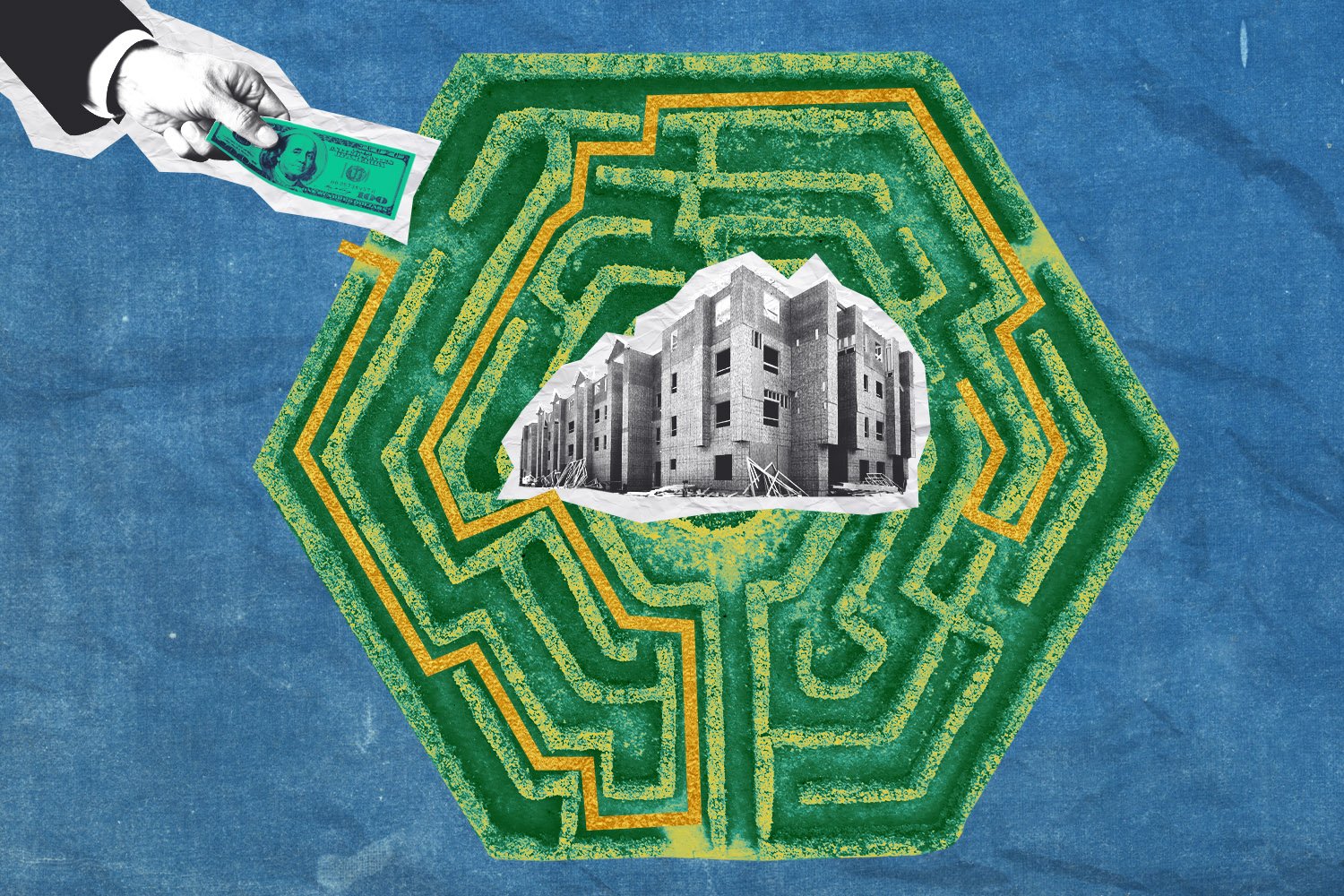
However the {dollars} haven’t morphed into rooftops. Even with funds available, zoning stays an enormous roadblock. Carving out pockets of affordability usually sparks fierce native pushback. Forward of the referendum vote, garden indicators warned of “high-density housing.”
As well as, environmentalists discovered to make use of state environmental opinions to dam tasks they deemed undesirable, although current reforms might change that technique.
Dealing with these obstacles, Southampton not too long ago approved an inexpensive housing overlay district to push workforce tasks into dear enclaves east of the Shinnecock Canal. The principles enable for developments of 10 to 35 items on heaps as small as 60,000 sq. toes, a transfer meant to interrupt the sample of clustering inexpensive items to the west.
City planners level to Sandy Hole Cove Flats — a 28-unit advanced, north of Montauk Freeway, designed to appear to be a manor residence — as proof that denser housing can coexist with luxurious neighbors.
“The ache of not having neighborhood housing is beginning to get larger than the perceived ache of permitting inexpensive housing.”
Progress stays sluggish, because the city board has to approve every utility to the overlay district. 4 tasks totaling 58 items in Tuckahoe, Water Mill, Shinnecock Hills and North Sea have been ready for approval. Councilperson Cyndi McNamara famous in December that residents usually suppose these tasks are a “carried out deal” as soon as the cash is there, resulting in frustration when pink tape stops the work.
“It has to undergo a whole change-of-zone course of…and it’s years and years down the road,” McNamara told 27east. To hurry issues up, she secured “floating” overlay districts to assist tasks with neighborhood assist get shifting quicker.
Shelter Island is a world of its personal, contemplating its comparatively small inhabitants. In line with the Shelter Island Reporter, the Neighborhood Housing Board is hoping to interrupt floor on 10 inexpensive items by the autumn, which might be the primary developed within the twenty first century.
In East Hampton, the city board not too long ago proposed changes to encourage employer-sponsored housing for staff incomes as much as 130 p.c of the world median revenue, however most present plans have but to make a dent within the native scarcity.
Cantwell Courtroom in Amagansett hit delays when building bids got here in too excessive, though a $7 million grant from the state ultimately saved the 16-unit challenge. In the meantime, a 50-unit plan in Wainscott that East Hampton transferred to the housing authority in 2024 continues to be tied up in research with no shovels within the floor but.
Whereas the Neighborhood Housing Advisory Board meets month-to-month, outcomes are laborious to trace and assembly minutes are hardly ever posted on time. For now, the East Finish continues to rake in tens of millions, however the highway from funding to precise housing stays lengthy and stuffed with turns.
It’s “like an enormous large ball of wax that must be unrolled,” Daly stated. “It’s taking place, however it’s not taking place quick sufficient.”
One potential push? Cities transforming their funds to deprioritize preservation (which nonetheless makes up the bigger chunk of the gross sales tax) and prioritize inexpensive housing. Cities could possibly maintain referendums sooner or later in the event that they need to rebalance funds
Daly additionally stated that the cities ought to search for contemporary concepts, together with relaxed guidelines round accent dwelling items and elevated curiosity in constructing smaller homes on smaller heaps.
Just lately, the Lengthy Island Builders Institute fashioned a coalition designed to advocate for points associated to allow delays on tasks and renovations, based on Newsday. Rising inexpensive housing is a part of the agenda.
Greater than coverage or cash, a profitable inexpensive housing push may imply altering hearts and minds along with advanced zoning. That’s beginning to transpire in such locations as Southold; Daly attended a current listening to at which a majority of individuals obtained up and spoke in favor of inexpensive housing, one of many first occasions he’s witnessed that.
“The ache of not having neighborhood housing is beginning to get larger than the perceived ache of permitting inexpensive housing,” Daly added.
