

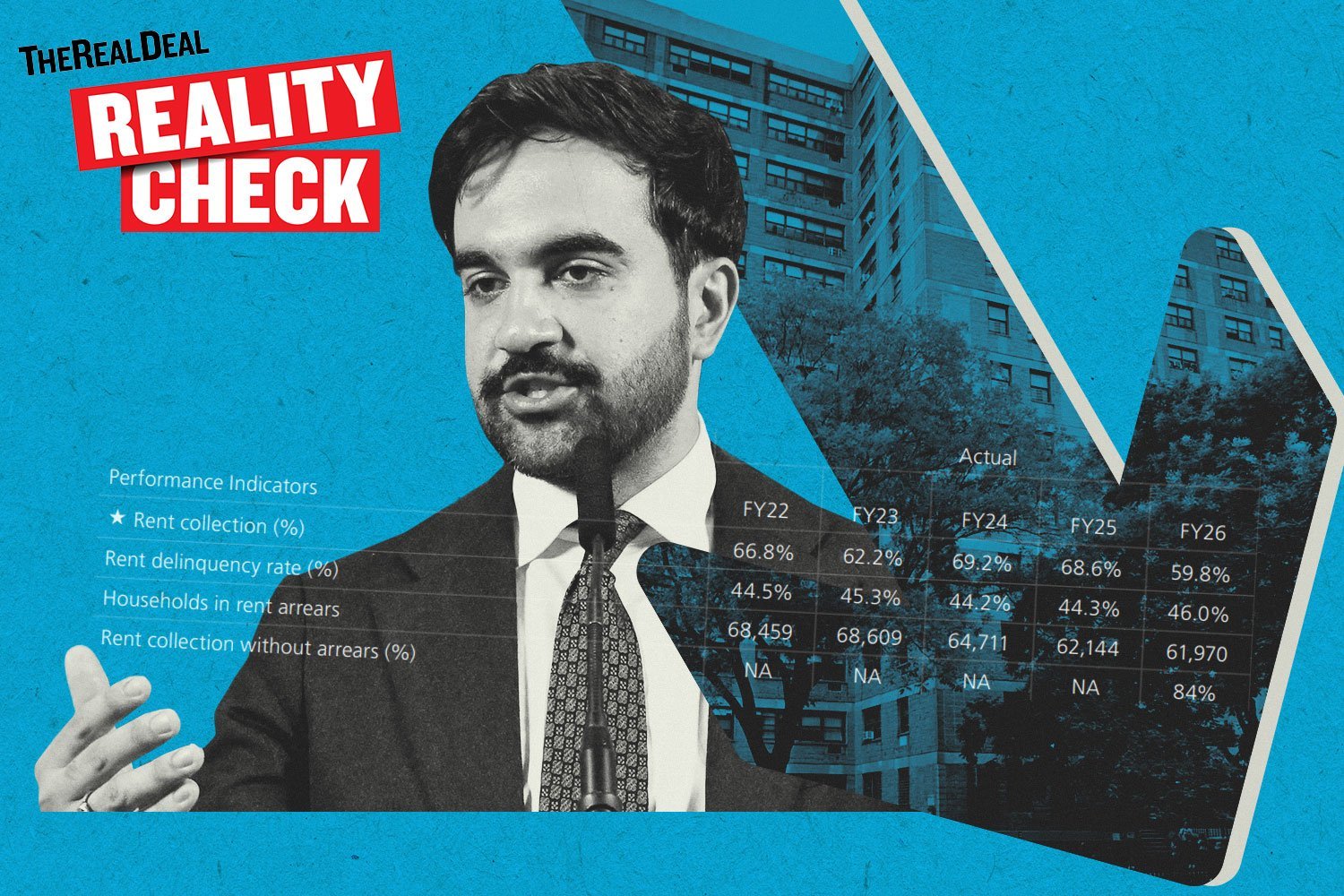
I sampled two Yale graduates with robust actual property information to see if both might make sense of New York Metropolis Housing Authority lease assortment knowledge. They failed.
If you happen to’d prefer to attempt, right here’s what the Mayor’s Management Report says:
“As of June 2026, cumulative lease assortment dropped 9 share factors from 68.6 p.c in Fiscal 2025 to 59.8 p.c in Fiscal 2026. NYCHA didn’t meet the goal of 97.5 p.c. Nevertheless, the cumulative 12-month lease assortment share excluding arrears and rental help was 84 p.c as of June 2026. Lease delinquency elevated two share factors from 44.3 p.c to 46.0 p.c.”
As one of many Ivy Leaguers emailed: “Did you discover that complicated as I did? How is lease assortment each 60% and 84%?!”
Luckily, I used to be capable of get it translated into English:
- “Cumulative lease assortment” is what NYCHA has collected previously 12 months out of the entire quantity owed for that interval plus previous arrears. That quantity was 59.8 p.c, possible an all-time low.
- “Lease assortment excluding arrears and rental help” (84 p.c) tracks whether or not households are maintaining with lease funds. It doesn’t embody previous arrears. If a few of their lease is paid by help packages corresponding to ERAP, CRA and HOME-ARP, that additionally doesn’t rely in opposition to them.
- Lease delinquency is the share of households with any arrears: 46 p.c.
It’s truthful to say that the numbers are usually not good, particularly contemplating that NYCHA’s rents are very low and that tenants pay not more than 30 p.c of their revenue in lease. If a family’s revenue falls to zero, the lease does too.
By the identical token, if a family member will get a job or a increase, the lease goes up, to some extent. Obligatory disclosure of revenue looks like a tough coverage to implement. However I digress.
A set fee of 84 p.c, excluding previous arrears, is low however not disastrous. Inexpensive housing suppliers average 89 percent nationwide, however simply 73 p.c in Brooklyn and Queens. Assortment charges within the mid 90s weren’t unusual till some tenants realized in the course of the pandemic that the implications of not paying rent are usually not as unhealthy as they thought, and generally are even good.
The place did they get this concept? First from the “cancel lease” motion, then from eviction moratoriums, a housing court slowdown and (if you happen to imagine landlords) kid-gloves treatment of non-paying tenants by judges. Even metropolis companies stepped in to cancel evictions that had been authorised by the courtroom, one thing I didn’t even know was attainable.
Additionally, phrase unfold that town was handing out one-shots to cowl tenants’ arrears, which helped stop evictions but in addition inspired delinquency — a traditional “ethical hazard.”
However these multi-year tendencies don’t clarify NYCHA’s cumulative lease assortment falling 9 share factors final fiscal 12 months. What does? A cynic may say Mayor Zohran Mamdani’s election victory boosted tenants’ perception that nothing a lot would occur in the event that they didn’t pay.
Mamdani is a democratic socialist however not a radical. He most likely believes tenants ought to pay their lease if the owner is maintaining their finish of the cut price. Nevertheless, that’s not Mamdani’s message. He promised to “freeze the rent” and provides low-income New Yorkers a break.
His Workplace of Tenant Safety director, Cea Weaver, appears to view lease as elective. In a 2021 interview with Purpose journal about working-class Chinese language immigrants whose tenants stopped paying lease in the course of the pandemic, Weaver mentioned:
“You don’t need to be within the enterprise of being a landlord. These are a part of the prices of being a landlord. That ought to be understood as a part of the deal. And it’s… They don’t have a god-given proper to gather lease.”
Weaver was in her early 30s on the time, previous the age the place excessive views may be attributed to youthful ignorance and idealism. She stopped speaking that manner solely when it grew to become clear that she can be a part of the Mamdani administration.
Tenant activists don’t admit that assortment charges fell as a result of tenants started seeing not paying as a alternative. As a substitute, they are saying, tenants merely can’t pay. “Nonpayment went up as a result of people are poor,” Weaver advised the New York Instances this summer time.
However folks have been poor earlier than, too. And but they paid their lease.
Nothing within the financial knowledge explains why NYCHA’s cumulative lease assortment plunged to 59.8 p.c in fiscal 2026 after hovering at 69.2 p.c and 68.6 p.c within the two earlier years.
The political clarification appears extra believable: Fiscal 2026 started one week after Mamdani received the Democratic main, basically clinching the mayoralty.
Mamdani’s insurance policies on Housing Authority renovations and improvement have been good. But when he has ever urged NYCHA tenants to pay what they owe, I missed it.
Learn extra
Can’t pay, won’t pay: NYC’s affordable operators get squeezed by slow collections

Any tenant who pays rent “should have his head examined”

“Folks got misinformed”: Why NYCHA tenants stopped paying rent
